Newsworthy
A photography game where you invent the incident, chase the shot, and sell it to an AI editor.
Visko Orbis generates the city live. Choose a preset incident or invent your own, then frame and sell the photograph. You have two minutes and twelve shots to earn as much as you can.
Finding a game in the live stream
I wanted to see what kind of game could be built around video generated as you play. Visko Orbis, accessed through Reactor, produces a continuous stream that can be redirected with prompts. I started with stories and escape rooms, but they needed continuity I couldn’t reliably get: characters duplicated, acting felt unnatural, and navigation was unreliable.
When I tried a helicopter view and prompted an explosion, it appeared quickly and looked convincing from above. That was worth building around, but I still needed an action the player could control reliably.
Playing We Become What We Behold helped me identify what I enjoyed about photography: searching the screen, framing a subject and timing the shot. I combined that interaction with the Nightcrawler premise of selling sensational news footage.
The player could control the photograph even when Orbis didn’t produce exactly what they requested. Incidents can still arrive late or only partly appear; the game lets players photograph whatever emerges.
Designing a newsroom interface
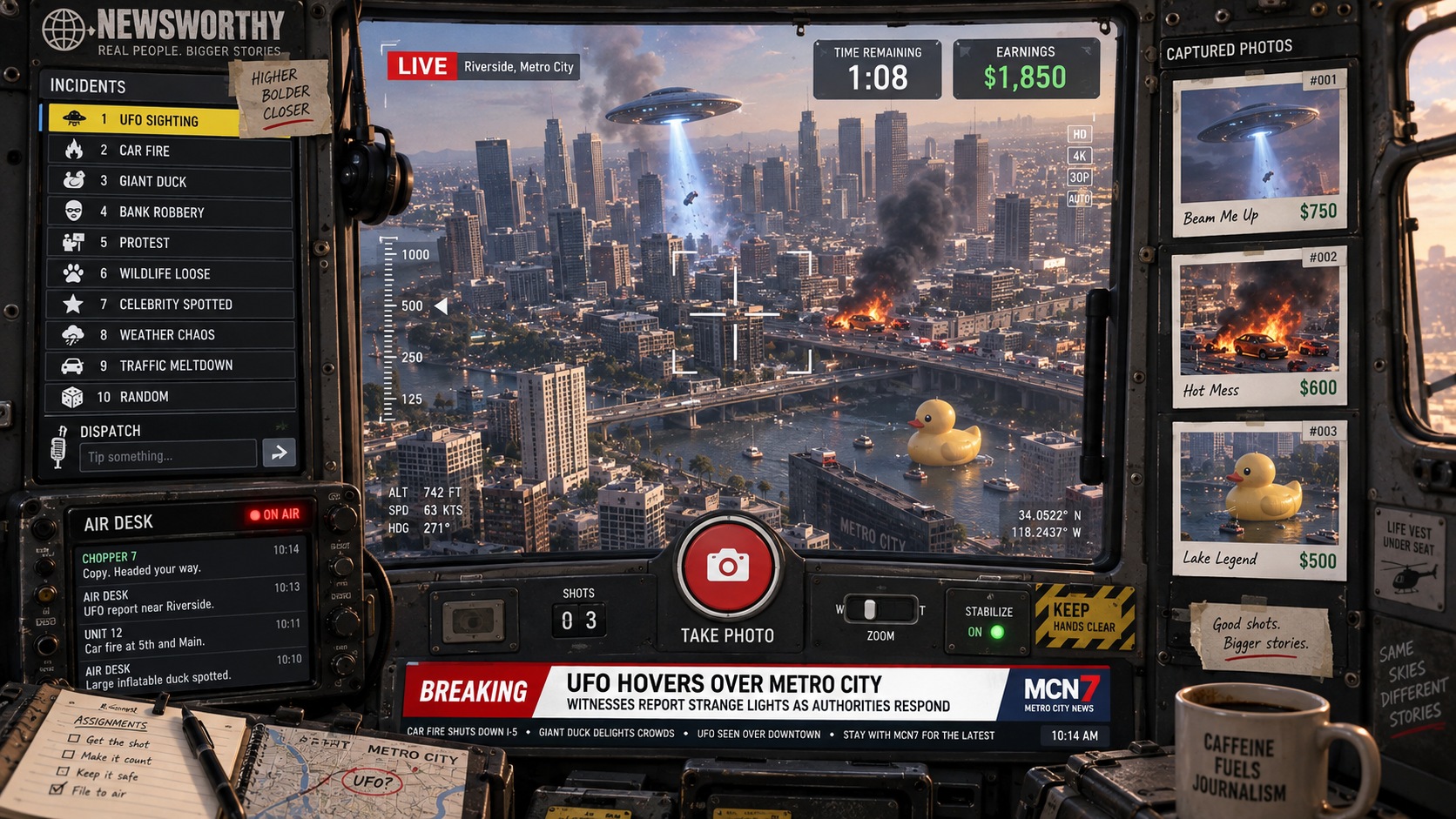
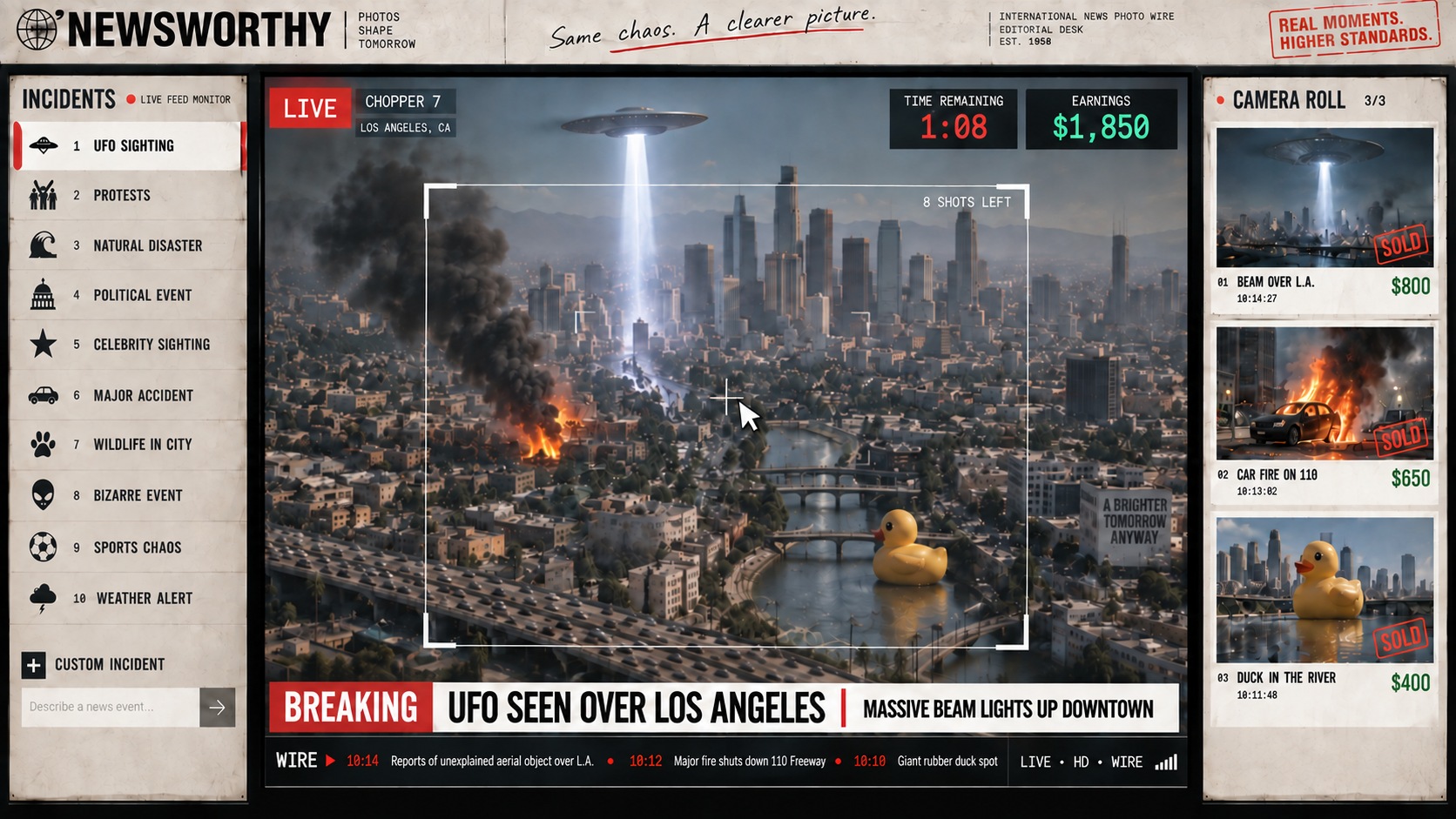
With the photography game taking shape, I wanted the interface to feel like part of the newsroom. I used OpenAI GPT Image through Codex to compare complete interface concepts before building them.
Two stood out: a helicopter cockpit and a newswire desk. I liked the cockpit, but the machinery dominated the image. The desk better fit the news premise, with incidents and photographs presented as editorial material.
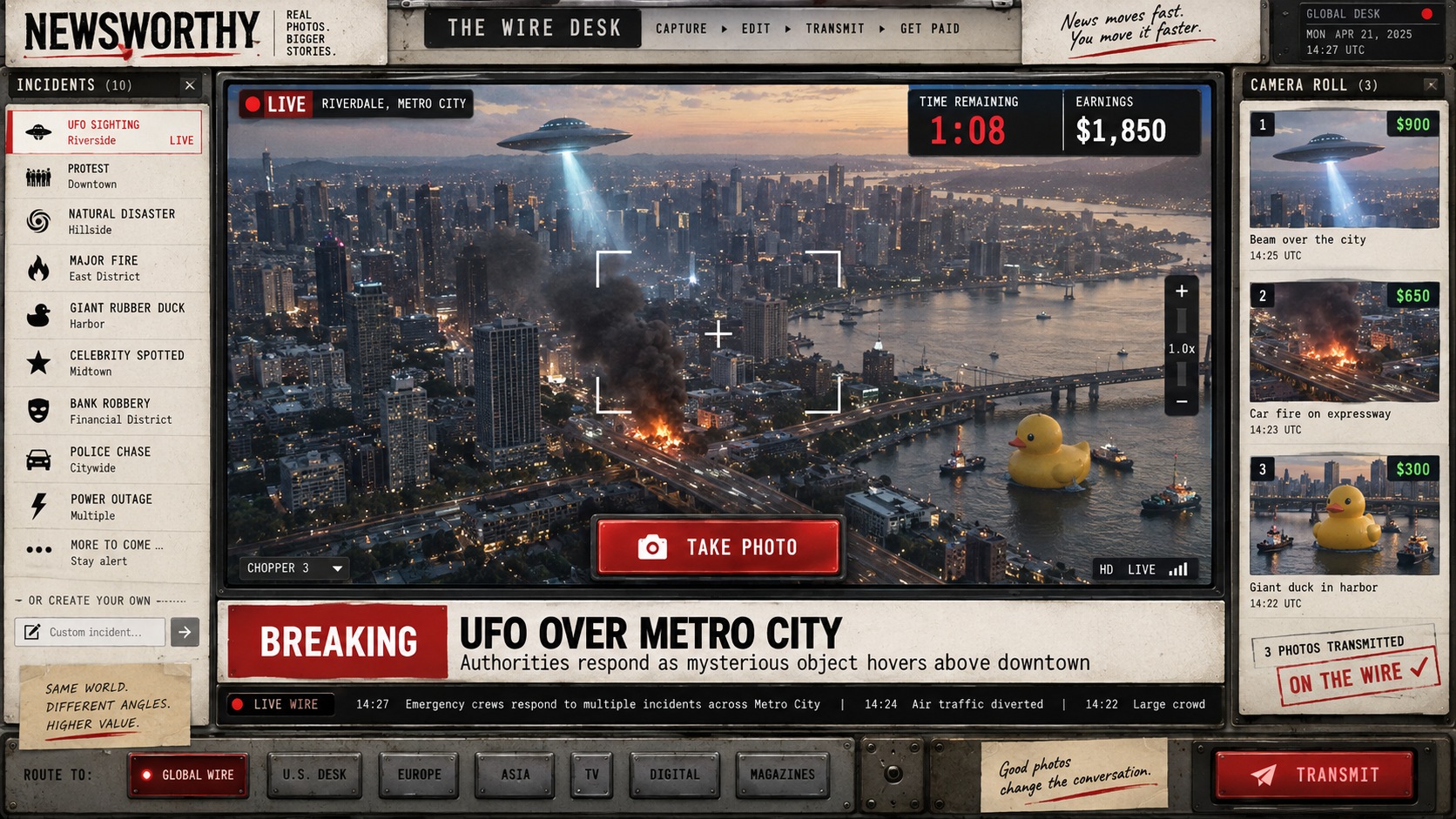
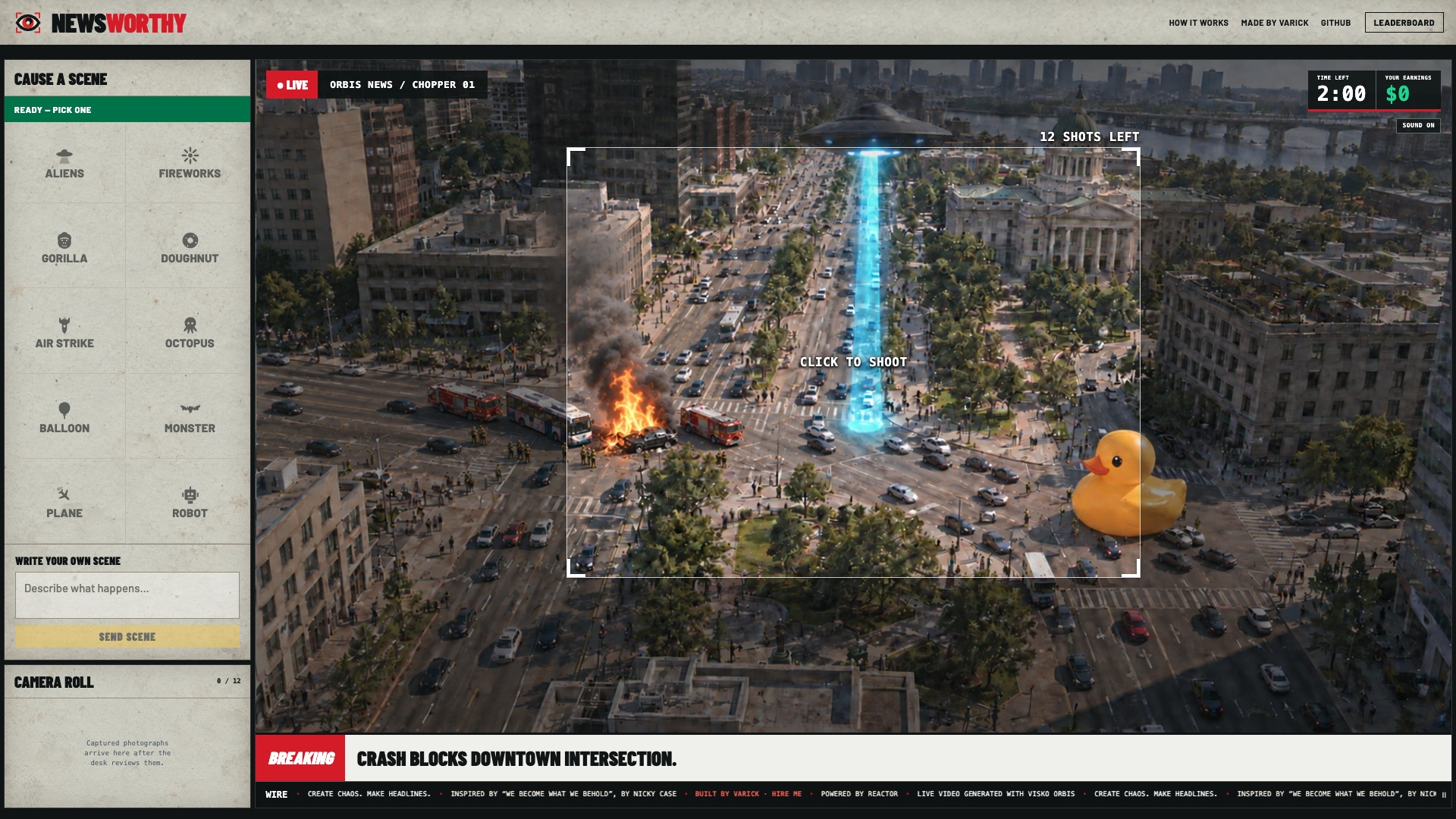
Turning the concept into a playable interface
The desk concept still had too much decoration around the camera. I removed the separate shutter button so players could frame and capture directly in the feed. Removing the notes and moving the banner and ticker into the feed left more room for the image.
Scoring each photograph
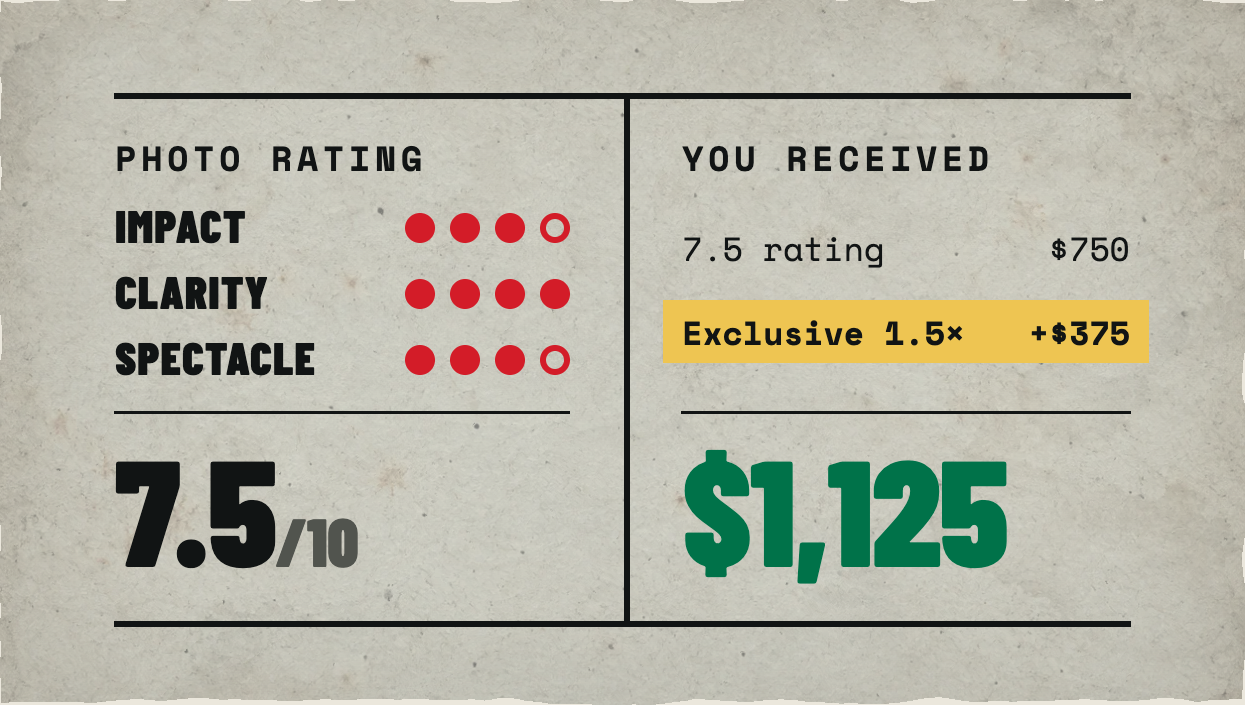
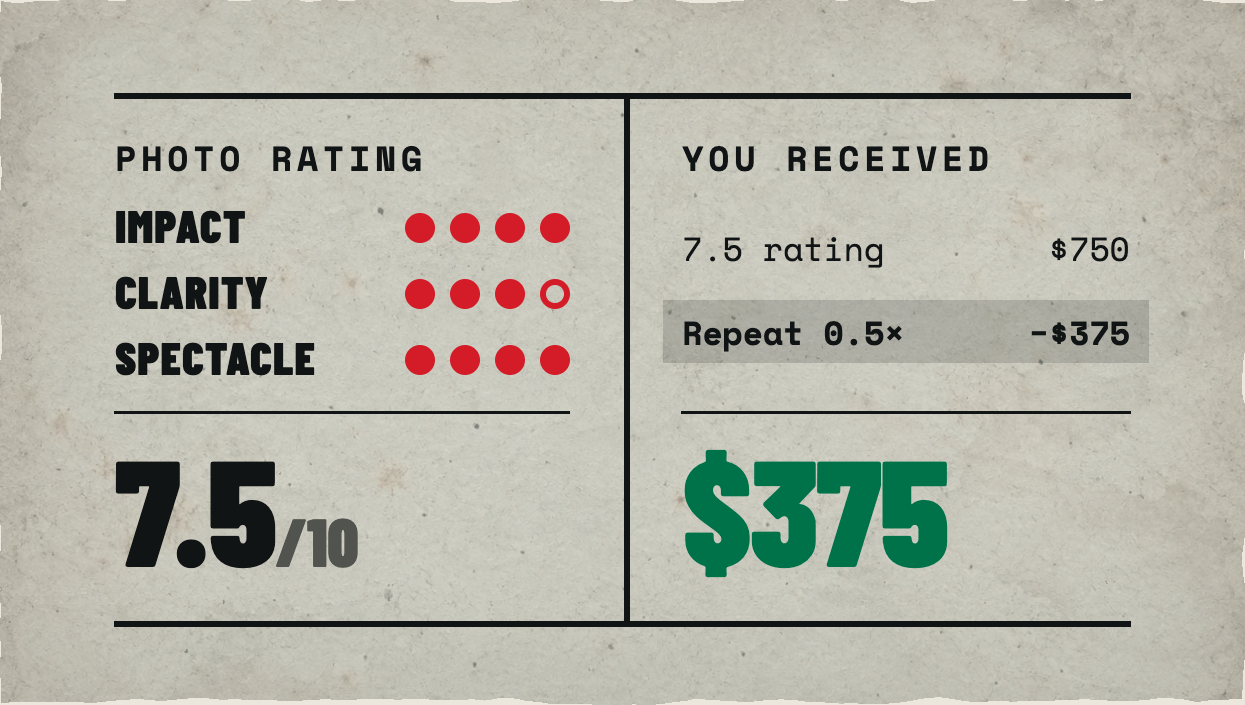
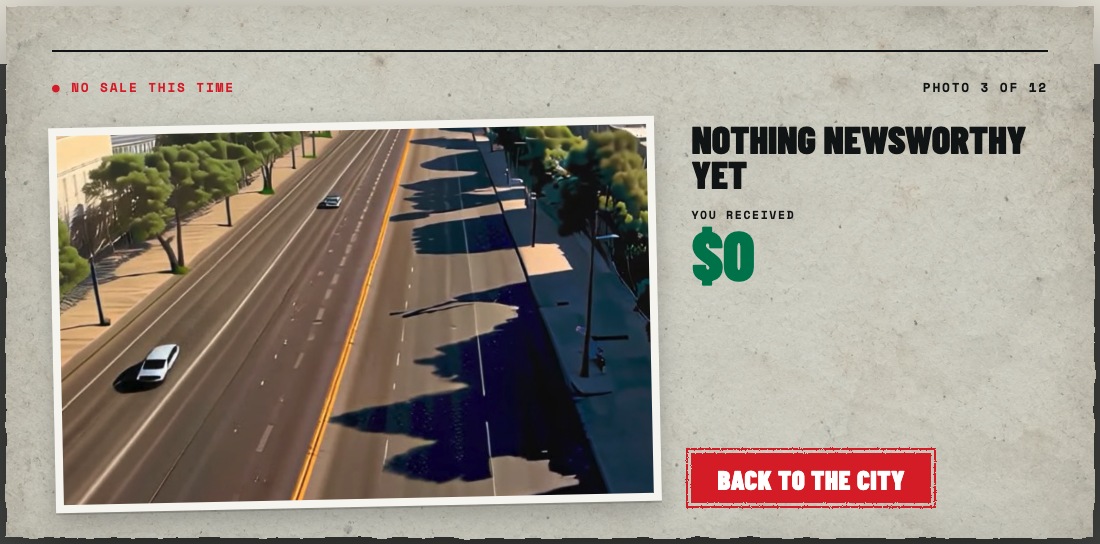
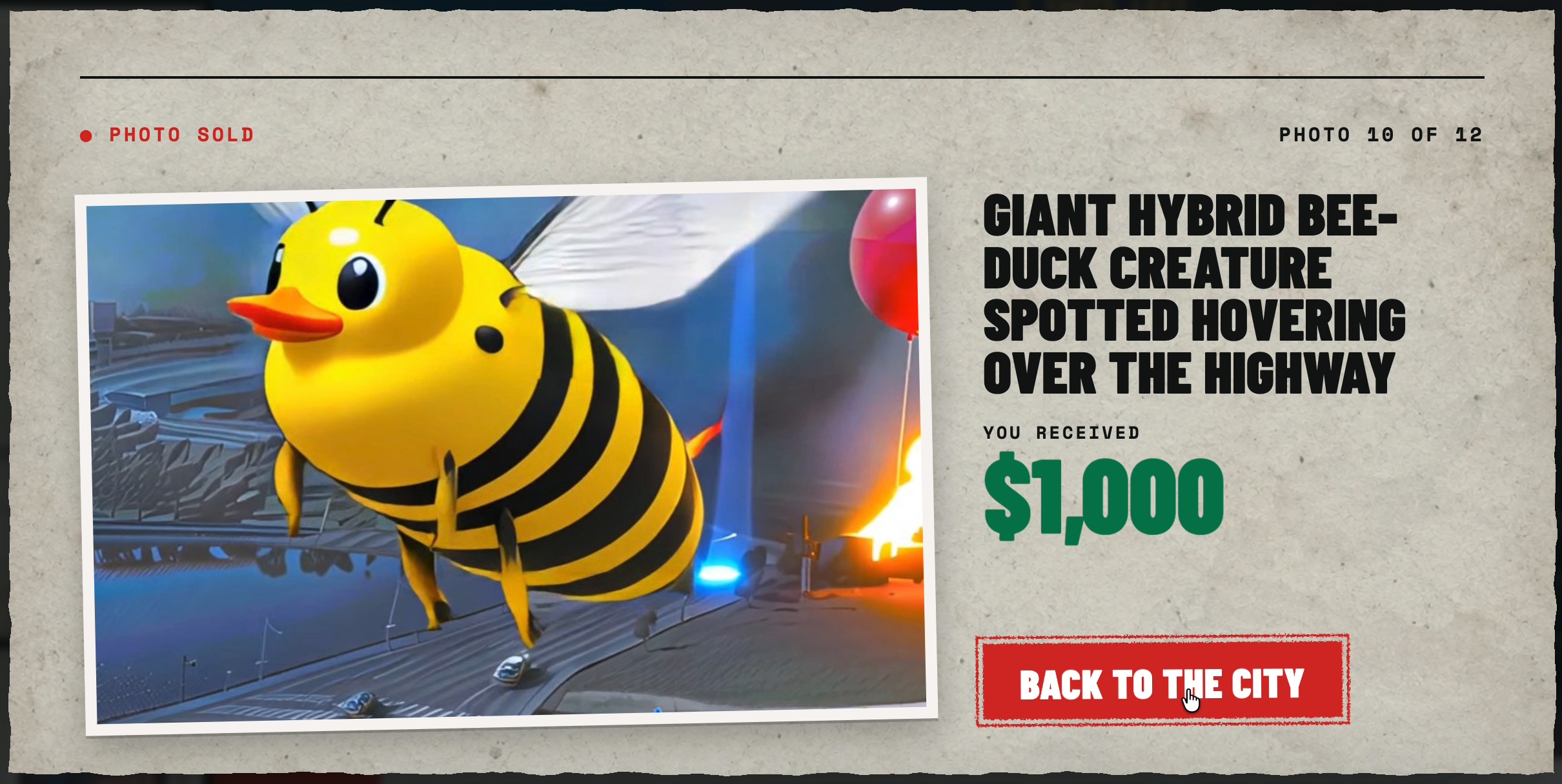
The editor judges what the player actually captured, including whatever Orbis made of the request. Gemini 3.5 Flash-Lite receives the photograph and earlier accepted shots, then returns grades for impact, clarity and spectacle, a headline and whether the story is a repeat. Code validates the response and calculates the payout.
Each photograph is scored when it is sold. In testing, this felt more rewarding than waiting until the end of the round: I could see what the shot had earned before returning to the city.
Refining the rules through playtesting
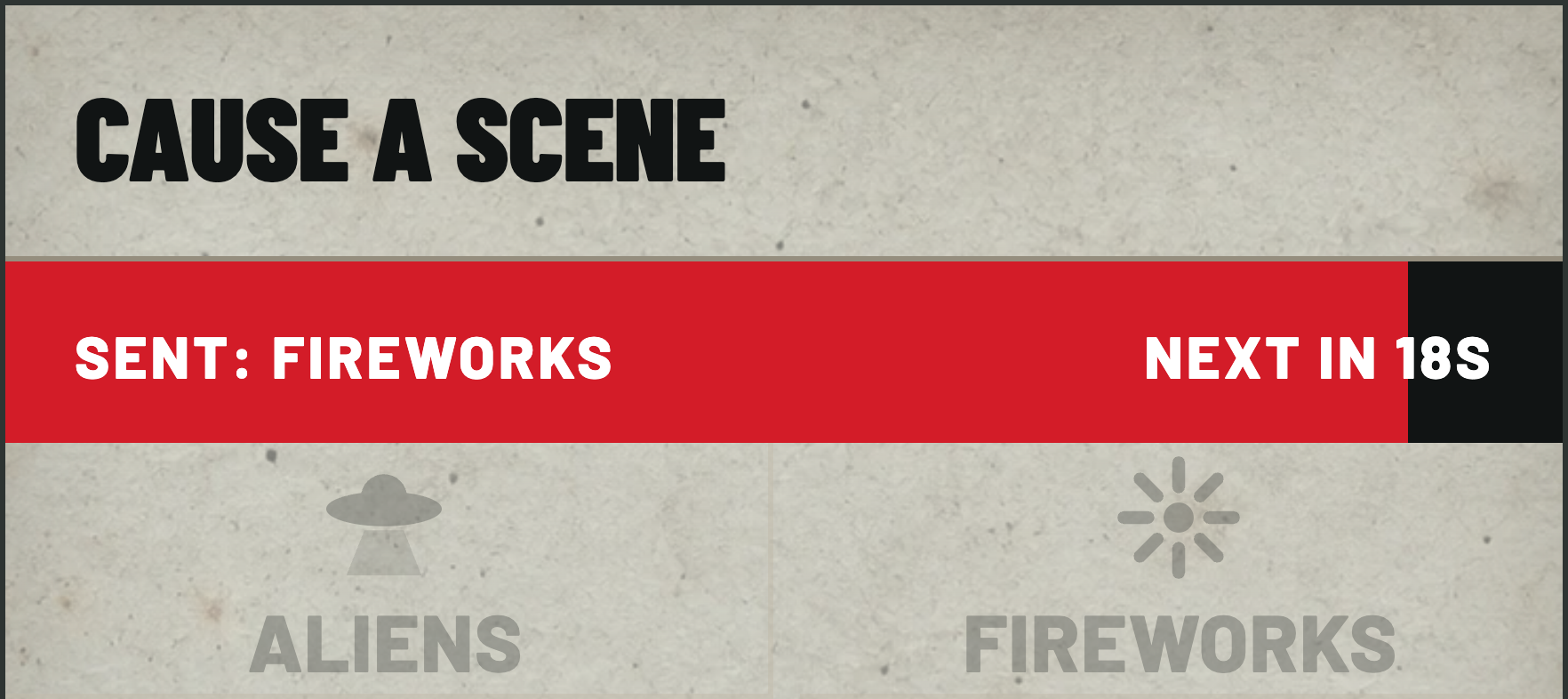
While testing, I kept resending requests when an incident was slow to appear. I added a 20-second countdown to give the scene time to develop and show when another request could be sent.
I also found that repeatedly photographing the same subject was an easy way to earn money. That felt like farming the same shot rather than looking for another. The game now halves payouts for repeat stories.
I wanted a reason to invent incidents, too. A 1.5× bonus for custom incidents encourages writing beyond the presets.